


Building Communities of Belonging: International Day for Countering Hate Speech
- 2 days ago
- 4 min read
Updated: 1 day ago
At a time when public conversations can often feel marked by division and hostility, the International Day for Countering Hate Speech offers an opportunity to reflect on the power of words to shape the relationships that bind communities together.
The Bahá'í writings place great emphasis on the influence of speech. Words can uplift or wound, unite or divide. Bahá'u'lláh writes:
"A kindly tongue is the lodestone of the hearts of men."
These profound words urge us to think of speech beyond simply a means of exchanging information. The language we use can shape the atmosphere around us, influence how people feel seen and valued, and either strengthen or weaken the bonds that connect us. While laws, policies, and public campaigns all have an important role to play in addressing hate speech, lasting change also depends on the habits we develop in our homes, neighbourhoods, schools, and places of work—habits of kindness, respect, empathy, and genuine care for one another.
Across the United Kingdom and around the world, Bahá'í communities are exploring how such qualities can be nurtured through a process of community building that brings people together to learn, serve, and contribute to the life of their communities.
Many of these activities draw on materials developed by the Ruhi Institute, an educational process that focuses on building capacity within individuals and communities to serve humanity. The materials explore many themes including reflections on the transformative power of words and deeds. Children are encouraged to develop qualities such as kindness, truthfulness, and justice. Young people learn to think critically about the messages they encounter and to consider how they can contribute positively to society. Adults come together in conversations that deepen understanding and inspire collective action.
The aim is not simply to avoid harmful speech. It is to help foster relationships and patterns of community life in which people increasingly see one another as members of one human family.
This vision is rooted in one of the central principles of the Bahá'í Faith: the oneness of humanity. If humanity is one family, then prejudice, contempt, and dehumanising language have no place within it. Every interaction becomes an opportunity either to strengthen bonds of friendship and fellowship or to reinforce barriers between people.
The Bahá'í writings encourage us to speak truthfully and honestly while remaining guided by love and respect. Bahá'u'lláh, the Founder of the Bahá'í Faith, describes the power of words in these terms:
"Every word is endowed with a spirit, therefore the speaker or expounder should carefully deliver his words at the appropriate time and place, for the impression which each word maketh is clearly evident and perceptible. ... One word is like unto springtime causing the tender saplings of the rose-garden of knowledge to become verdant and flourishing, while another word is even as a deadly poison."
Such an understanding does not require us to avoid difficult conversations. Rather, it invites us to approach them with humility, patience, and a sincere desire to understand one another and find common ground.
Across the country, Bahá'í-inspired community-building efforts offer examples of this constructive approach. In neighbourhoods, villages, towns, and cities, people are discovering how spaces for prayer, study, service, and meaningful conversation can strengthen social bonds across lines of age, ethnicity, culture, and belief.

In one neighbourhood in Northamptonshire, a group of friends hosts a monthly Community Café, inviting neighbours and friends to gather around themes that contribute to building a safe, united, and vibrant community. Each gathering is animated by music, creative arts activities, and conversations that encourage participants to reflect on their shared aspirations and experiences. Through these simple but purposeful encounters, friendships deepen and a greater sense of belonging begins to emerge.
At a recent Community Café, participants explored the theme of friendship. Together they studied passages from the Bahá'í writings, shared songs, and created artwork inspired by the words of 'Abdu'l-Bahá:
"If you desire with all your heart, friendship with every race on earth, your thought, spiritual and positive, will spread; it will become the desire of others, growing stronger and stronger, until it reaches the minds of all men."


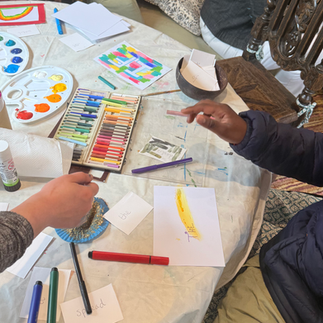
While such gatherings may appear simple, they create opportunities for people to build trust, deepen friendships, and discover what they share in common. Over time, these bonds strengthen the fabric of community life and help create environments where prejudice and hostility are less likely to flourish.
These same principles find expression in celebrations of unity in diversity. In Scotland, a local Bahá'í community hosted an international potluck that brought together friends, neighbours, and colleagues from a wide range of cultural backgrounds. Inspired by the Bahá'í principle that "The earth is but one country and mankind its citizens," participants shared food, music, creativity, and conversation while exploring their hopes for an increasingly cohesive and inclusive community.
Through simple acts of hospitality and fellowship, people from many different backgrounds strengthened bonds of friendship and mutual appreciation, creating a space where unity in diversity was not merely discussed but experienced.



The International Day for Countering Hate Speech therefore serves as more than a reminder of what we must oppose. It is also an invitation to consider what we can build. Communities characterised by trust, friendship, and meaningful participation do not emerge by chance. They are cultivated patiently through many acts of service, learning, consultation, and mutual support.
As communities around the world seek to navigate increasing social fragmentation, these experiences offer a reminder that the foundations of a more peaceful and united society are often laid through simple yet profound acts of listening, learning, serving, and speaking to one another with kindness and respect.
Written by the UK Bahá'í Office of Public Affairs


